
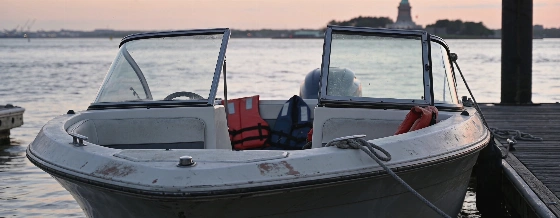
A fatal boat accident off Liberty Island left a mother and infant dead, highlighting the financial and legal risks of unregulated charters and the potential costs for families and operators involved
A late-night boating accident near Liberty Island has left a Queens family facing devastating loss and renewed scrutiny on the financial and legal risks tied to unregulated water charters. According to WABC, a 27-year-old mother and her 5-month-old daughter died after a 22-foot power boat carrying 14 people capsized late Saturday. Twelve others were rescued and treated for minor injuries, while the boat's operator was arrested on multiple counts of reckless endangerment.
The vessel, identified as a bowrider typically designed for 10 to 12 passengers, was reportedly carrying church friends celebrating a birthday. The mother, Sara Sanchez, and her infant daughter, Antonella Garcia, were transported in critical condition to NYU Langone Brooklyn, where they were later pronounced dead. The U.S. Coast Guard and NYPD are investigating whether the trip was an illegal charter, a scenario that could expose the operator and any organizers to significant civil and criminal liability, as well as insurance complications.
For families affected by such tragedies, the financial fallout can be severe. Medical bills, funeral expenses, and potential loss of income can quickly add up, especially for households without adequate insurance or emergency savings. In this case, the surviving husband and father, who was also on board, is left to support a six-year-old son and manage the aftermath without extended family in the U.S. Community members have launched a fundraiser to help cover immediate costs, underscoring the vulnerability many families face when disaster strikes without a financial safety net.
Boat operators who run unauthorized charters may not carry the commercial insurance required for passenger liability, leaving victims and their families with limited avenues for compensation. Legal experts note that personal liability in such cases can extend beyond criminal charges to civil lawsuits, potentially resulting in asset seizures or wage garnishment. For passengers, the lack of regulatory oversight increases the risk of accidents and complicates claims for damages or medical costs.
According to the U.S. Coast Guard's 2023 Recreational Boating Statistics, there were 4,040 boating accidents nationwide, resulting in 636 deaths and over $63 million in property damage. The report highlights that operator inattention, improper lookout, and overloading are among the leading causes of fatal incidents. Unlicensed or illegal charters are a growing concern in major metropolitan areas, where demand for private boat rides often outpaces regulatory enforcement.
For consumers, verifying the legitimacy of charter operators is a critical step before booking any excursion. Licensed operators are required to meet safety standards, carry appropriate insurance, and limit passenger counts based on vessel specifications. Passengers should ask for proof of licensing and insurance, and be wary of deals that seem too good to be true or operators who avoid written contracts. In the event of an accident, the presence of proper documentation can make a significant difference in the ability to recover damages or medical costs.
Boat insurance in the U.S. varies widely depending on the type of vessel, intended use, and whether the operator is carrying paying passengers. Standard recreational policies typically exclude coverage for commercial activity, meaning unauthorized charters may leave both operators and passengers financially exposed. For families, maintaining an emergency fund and reviewing insurance coverage for travel and recreation can help mitigate the impact of unexpected events. Legal recourse after an accident often depends on the operator's compliance with licensing and insurance requirements, as well as the circumstances of the incident.