
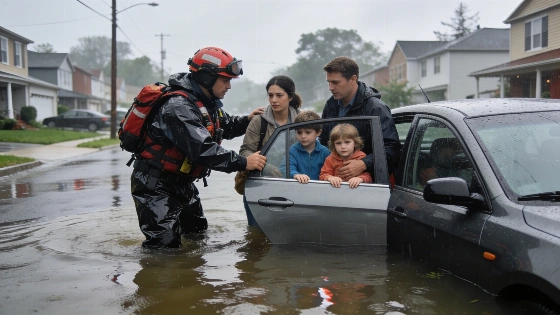
Historic rainfall across New York, New Jersey, and New England has led to widespread flooding, travel shutdowns, and emergency rescues, raising concerns about infrastructure costs and insurance coverage for affected households
Relentless rainfall over two days has brought record-setting floods to the Northeast, disrupting daily life and exposing financial vulnerabilities for residents and local governments. As slow-moving storms swept through New York, New Jersey, and New England, communities faced submerged roads, stranded vehicles, and urgent water rescues. The financial impact is already mounting, with infrastructure damage, canceled flights, and insurance claims likely to rise as the region assesses the aftermath.
In eastern New York, several counties declared states of emergency as rainfall totals exceeded 7 inches in multiple locations. State rescue teams were dispatched to assist residents trapped by rising waters, and dozens of roads were closed due to flooding. In one of the most tragic incidents, a 10-year-old boy in New Jersey died after being swept away in the Passaic River, while the search for a missing girl continues. These events highlight the risks that extreme weather poses not only to safety but also to household finances and local economies.
Travel disruptions have rippled through the region. According to FlightAware, more than 200 flights were canceled at New York City's major airports-LaGuardia, JFK, and Newark-on Wednesday, with Boston Logan International Airport reporting over 70 cancellations and hundreds of delays. Amtrak suspended service between New York City and Albany due to high water and debris on the tracks, further complicating commutes and business travel. These interruptions can lead to lost wages, additional expenses for travelers, and logistical headaches for businesses dependent on timely shipments and employee mobility.
Flooding also forced emergency evacuations in several communities. In Guilderland, New York, video footage showed cars stranded in waist-deep water, while firefighters in Chatham rescued a U.S. Postal Service mail carrier from a delivery vehicle trapped by floodwaters. In Columbia County, nearly two dozen roads were closed, and local fire departments worked to pump water from homes. State rescue teams used heavy equipment to evacuate families from homes nearly surrounded by water in Putnam County. The financial toll for homeowners may include property damage, temporary relocation costs, and potential gaps in insurance coverage, especially for those without flood insurance.
As the storm system weakened late Wednesday, meteorologists warned that scattered showers could still bring localized flooding, particularly in eastern New York and coastal New England. The National Weather Service maintained a Level 1 risk for isolated flooding from Boston to coastal Maine on Thursday. While the immediate threat is receding, the cleanup and recovery process is just beginning, with long-term financial implications for affected households, municipalities, and insurers.
According to the National Weather Service, Albany International Airport recorded 6.7 inches of rain over two days, the highest two-day total on record for the city. Schodack, New York, saw nearly 12 inches-more than double the area's average rainfall for the entire month of July. In New Jersey, some towns received a full month's worth of rain in a single day, overwhelming drainage systems and prompting at least 20 water rescues in Paterson. These figures underscore the increasing frequency and severity of extreme weather events in the region.
Insurance and Infrastructure Risks
For many homeowners, the financial fallout from flooding depends on insurance coverage. Standard homeowners policies typically exclude flood damage, requiring separate flood insurance, which is often underutilized in areas not designated as high-risk. As a result, many families may face significant out-of-pocket costs for repairs and temporary housing. Local governments, meanwhile, must contend with the expense of repairing roads, bridges, and public facilities, often straining municipal budgets and leading to requests for state or federal disaster aid.
Infrastructure vulnerabilities have become more apparent as storms intensify. Aging drainage systems, undersized culverts, and deferred maintenance can exacerbate flooding, increasing the likelihood of property damage and service disruptions. Municipalities may need to accelerate investments in resilient infrastructure, but such projects require funding and long-term planning, which can be challenging amid competing budget priorities.
Travel and Economic Impact
Flight cancellations and rail service suspensions have immediate economic consequences. Business travelers, tourists, and commuters may incur additional costs for rebooking, lodging, or alternative transportation. Companies reliant on just-in-time deliveries or in-person meetings can experience delays and lost productivity. For hourly workers, missed shifts due to transportation shutdowns can mean lost income, while small businesses in affected areas may see reduced foot traffic and sales.
Flooding also disrupts supply chains, particularly for industries dependent on regional transportation networks. Prolonged closures of key routes can delay shipments of goods, increase costs for logistics providers, and ripple through the broader economy. The cumulative effect of these disruptions can be significant, especially if extreme weather events become more frequent.
Household Financial Preparedness
For households, the recent flooding serves as a reminder of the importance of emergency savings and adequate insurance. While federal disaster assistance may be available in some cases, it often covers only a portion of losses and can take time to arrive. Families without sufficient savings or insurance may need to rely on credit cards, loans, or community support to cover immediate expenses, increasing their financial vulnerability.
Consumers should review their insurance policies to understand what is and isn't covered, especially as climate risks evolve. Flood insurance is available through the National Flood Insurance Program (NFIP) and some private insurers, but coverage limits, waiting periods, and exclusions vary. Homeowners and renters in flood-prone areas may want to assess their risk and consider whether additional coverage or mitigation measures are warranted.
Flood insurance is a specialized product designed to cover losses from rising water, which is typically excluded from standard homeowners and renters policies. The NFIP, managed by the Federal Emergency Management Agency, offers coverage for both buildings and contents, but policyholders should be aware of coverage limits and deductibles. Private flood insurance options have expanded in recent years, sometimes offering higher limits or broader coverage, but premiums and eligibility can vary widely. As climate change increases the risk of severe weather, understanding and managing flood risk is becoming a more urgent financial priority for many U.S. households.