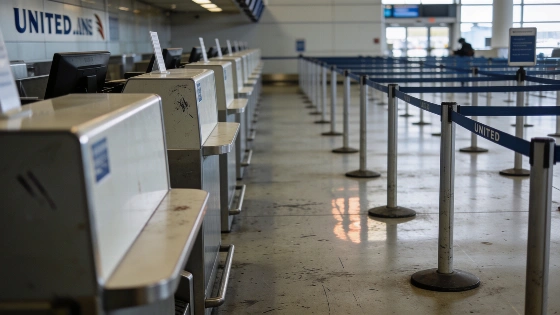
United Airlines will not resume its Newark to Dubai flights until March 2027, extending refunds to affected travelers as U.S. and European carriers face ongoing risks and shifting restart dates for Middle East routes
Travelers hoping for a prompt resumption of U.S. airline service to Dubai face further delays. United Airlines has postponed its Newark to Dubai route once again, now projecting a possible restart in March 2027. Customers with canceled flights between October 24, 2026, and March 27, 2027, are eligible for full refunds. This extension underscores the ongoing uncertainty major carriers face regarding the region's stability.
United Airlines has stated that it 'looks forward to resuming' nonstop Newark-Dubai flights in March, but has not confirmed a specific year or calendar date for the restart.
These postponements are driven by persistent risks. The U.S.-Israeli strike on Iran in February 2026 led to widespread airspace restrictions and insurance complications that remain unresolved. Airlines are weighing the possibility of resuming flights only to face renewed suspensions if security conditions worsen. For U.S. travelers, this results in fewer available routes, higher fares on the limited remaining options, and increased dependence on Gulf carriers such as Emirates and Etihad, which continue to provide the most consistent service between the U.S. and the United Arab Emirates.
According to Reuters, Dubai remains one of the most affected destinations, with several European and Asian carriers also extending their suspensions until October 2026 or later due to ongoing regional risks and airspace restrictions.
British Airways attributes its continued suspensions across Abu Dhabi, Amman, Bahrain, Doha, Dubai, Tel Aviv, and Riyadh to ongoing uncertainty and airspace limitations. KLM's repeated delays from Amsterdam reflect similar caution. As of September 2026, only Emirates and Etihad maintain reliable direct flights from major U.S. cities to Dubai and Abu Dhabi, leaving U.S. and European carriers largely absent from the market.
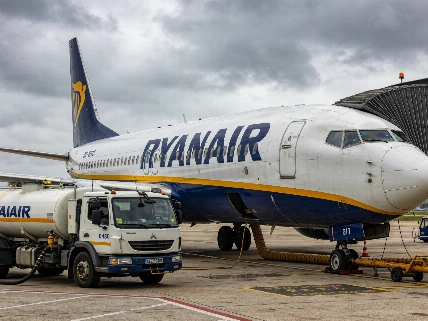
For travelers seeking alternatives, options are limited and often come at a higher cost. Gulf carriers have little incentive to reduce fares while demand exceeds supply. This situation contrasts with the increased competition and lower prices seen when new low-cost airlines entered the European market, as previously reported. In this case, U.S. travelers face fewer choices and rising costs.
Data from the U.S. Bureau of Transportation Statistics shows that international air passenger traffic from the U.S. to the Middle East declined by more than 60% year-over-year in the first half of 2026, with most remaining traffic concentrated on Gulf-based airlines. Insurance premiums for flights through the region have increased, and carriers are incurring higher operating costs due to longer rerouted flight paths and enhanced security measures.
United's latest postponement is more than a scheduling adjustment-it signals that U.S. and European airlines do not anticipate a near-term return to stable, profitable operations in the region. For U.S. travelers, this means a market dominated by Gulf carriers, with limited competitive pressure to moderate fares. Until the security and regulatory environment improves, U.S. airlines are likely to remain sidelined, and passengers will continue to face higher costs as airlines prioritize safety and financial viability over restoring pre-crisis service levels.
When airlines suspend or delay international routes, the effects extend beyond immediate travel disruptions. Such suspensions can impact business connections, tourism, and cargo supply chains, particularly when alternative carriers have limited capacity or higher prices. For travelers, staying informed about refund policies and monitoring airline updates is crucial, as eligibility and rebooking options may change rapidly in response to geopolitical developments. In volatile regions, flexibility and contingency planning are as important as price when booking international flights.