Delta has quietly ended complimentary snacks and beverages on all flights under 350 miles for Main and Comfort passengers, making it the strictest among major U.S. airlines and shifting costs onto frequent flyers on short routes
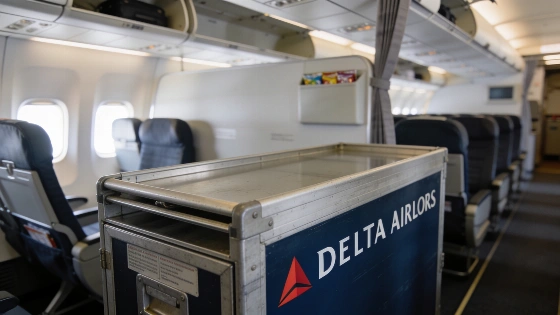
Delta Air Lines has eliminated complimentary snacks and beverages on more than 450 daily flights under 350 miles, requiring Main and Comfort passengers to pay for items that were previously free. This policy change, introduced without public announcement, positions Delta as the least generous among major U.S. carriers for short-haul service. In contrast, American, United, and Southwest continue to provide at least a basic snack and beverage on comparable routes.
Delta's regional carrier Endeavor Air will require passengers to stow complimentary pre-departure water bottles before pushback starting September 1, 2026, to comply with a stricter FAA interpretation.
Policy shift and competitive context
Delta's updated policy replaces a three-tier system with a two-tier cutoff: flights under 350 miles receive no complimentary service, while those at or above 350 miles retain the full snack and beverage offering. Previously, flights over 250 miles included at least an express service-two snack options and coffee or tea. Under the new rules, routes just below the 350-mile threshold lose out, while some longer short-hauls, such as Atlanta to Orlando (about 400 miles), now gain access to the full menu.
Delta cites "consistency" across its network as the reason for the change, but the practical result is a reduction in service on hundreds of routes where competitors still provide snacks and drinks. According to WCNC, American and Southwest maintain service on flights over 250 miles, and United's cutoff is 300 miles. As a result, a traveler on a 340-mile Delta flight receives no complimentary items, while the same distance on American or Southwest still includes a snack and a drink.
What passengers can expect
On affected flights, passengers may purchase snacks and beverages, with Delta accepting payment onboard. Delta SkyMiles credit card holders receive a 20% rebate as a statement credit on in-flight food and drink purchases, and the Platinum and Reserve versions of the card earn 3x miles on Delta spending. For those with Sky Club access, obtaining food and coffee before boarding remains an option at major hubs.
United Airlines continues to differentiate its in-flight service by distance, offering snack baskets on many short and medium-haul flights, and even providing warmed food items on select hub-to-hub routes around 800-900 miles. This highlights how major U.S. carriers still vary their service standards, with United's approach contrasting Delta's stricter cutoff.
Financial impact and industry trends
Delta's decision comes as airlines across the industry seek to reduce costs and standardize operations. The company is wagering that passengers on short routes will either not notice or will not be motivated to switch carriers. However, the risk is clear: on routes where competitors offer more, Delta's premium image may be diminished. The airline's choice to quietly reduce amenities, rather than announce a price cut or new benefit, reflects a shift in how it balances cost control with customer experience.
According to the Bureau of Transportation Statistics, U.S. airlines carried over 853 million passengers in 2023, with short-haul flights representing a significant portion of domestic travel. Ancillary revenue from onboard sales, including food and beverage, has become an increasingly important source of income for carriers as they seek to offset rising labor and fuel costs. Delta's policy change is a direct effort to capture this revenue, even as it risks alienating loyal customers on key business routes.
For travelers evaluating their options, the new rules are clear: Delta now provides less on short flights than any other major U.S. airline. The company is relying on brand loyalty and credit card incentives to retain most passengers. However, as reported earlier, competition in the airline industry is intensifying, and even minor changes in service can influence the choices of price-sensitive or frequent travelers. Delta's willingness to reduce its own premium offerings for operational simplicity and incremental revenue highlights the current priorities within the industry.
Airline service tiers continue to evolve, and Delta's latest policy demonstrates how quickly the definition of "premium" can shift under cost pressures. For now, short-haul Delta passengers should expect reduced amenities, increased out-of-pocket costs, and ongoing changes as other carriers decide whether to follow Delta's lead or use the opportunity to differentiate their own service.
Airline amenity policies are often determined by route length, but these cutoffs are primarily driven by operational efficiency and cost management rather than passenger comfort. For airlines, each complimentary snack or drink represents a direct expense multiplied across thousands of flights. As carriers refine their service models, travelers should anticipate more detailed distinctions based on distance, fare class, and loyalty status. Understanding these factors can help frequent flyers make informed decisions about which routes and benefits offer real value-and which are being quietly reduced.