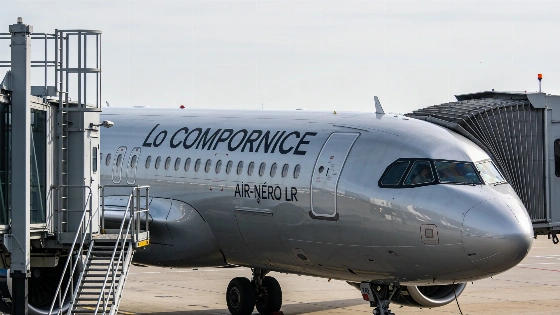
La Compagnie is adding nonstop service from Newark to Düsseldorf with its all-business-class Airbus A321neo LR, targeting high-spending travelers and corporate clients as premium air travel demand rebounds
La Compagnie is reinforcing its commitment to the all-business-class model by launching a new nonstop route from Newark to Düsseldorf, with round-trip fares starting at approximately $3,500. The French boutique airline is positioning itself to attract U.S. travelers seeking a dedicated business-class experience-particularly when its pricing undercuts legacy carriers' business fares by several hundred dollars.
La Compagnie will be the only airline offering a nonstop connection between New York and Düsseldorf when the route launches in spring 2027.
While most airlines have moved away from the all-business-class approach-BermudAir, for instance, shifted to a mixed model with lower fares-La Compagnie has established a niche by emphasizing French hospitality and a streamlined, luxury-focused product. The airline already connects Newark with Paris, Nice, and Milan, and now seeks to serve both business and leisure travelers bound for Germany's economic center.
For U.S. travelers, the value proposition is distinct: a business-class seat at a price that, though premium, is often below what major U.S. and European carriers charge for comparable transatlantic comfort. This strategy contrasts sharply with the ultra-low-cost model prevalent elsewhere in Europe, such as Fly2Galicia's $25 fares for religious tourism, as previously reported.
At launch, La Compagnie plans to operate up to five flights per week in the summer season, with the route served by its signature Airbus A321neo LR featuring 76 fully lie-flat seats in a 2-2 configuration. Ticket sales are available through the airline's website and travel agents.
La Compagnie's CEO has described the Düsseldorf launch as a logical progression, citing the region's strong business connections to the U.S. and its appeal as a summer tourism destination with historic towns, castles, and vineyards. The airline is also preparing for future expansion, with plans to receive an Airbus A321XLR in 2028, potentially enabling even longer-range routes to additional European cities.
Premium air travel has seen a significant rebound since the pandemic, with business-class bookings on transatlantic routes increasing by more than 20% year-over-year in 2023, according to International Air Transport Association data. Airlines have responded by upgrading cabins, adding lie-flat seats, and focusing on high-margin travelers-though few have adopted the all-business-class model as comprehensively as La Compagnie.
Currently, the airline's success depends on its ability to consistently fill its 76 seats with travelers willing to pay for enhanced comfort, privacy, and a boutique experience. If the Düsseldorf route proves profitable, it could validate the all-business-class approach for select transatlantic markets, even as most carriers continue to prioritize volume and price-sensitive passengers. La Compagnie's expansion in this high-cost, high-reward segment reflects a clear belief in the continued demand for premium-only service-provided the product and pricing align with traveler expectations. Ultimately, the market will determine whether enough U.S. and European travelers are willing to pay for a dedicated business-class cabin when lower-cost alternatives remain readily available.
Business-class air travel represents a high-stakes segment for airlines, with premium seats often generating more than half of a transatlantic flight's total revenue despite comprising a small portion of total capacity. Profitability relies on maintaining high load factors and securing corporate contracts, as empty business seats can quickly undermine financial performance. For travelers, the choice is straightforward: pay more for comfort and amenities, or select economy to save on costs. As airlines like La Compagnie redefine the boundaries of premium travel, the market will ultimately decide whether luxury or low cost prevails in the next phase of transatlantic competition.