Rocket Lab's satellite ambitions, AMD's AI pivot, and SpaceX's capital spending are reshaping tech investing as market volatility tests investor conviction and company forecasts diverge sharply
U.S. markets opened the week with a strong rally, as the S&P 500 climbed 1.79% and the Nasdaq surged 2.59% on Tuesday. Yet beneath the surface, sharp moves in individual stocks and sectors revealed how investor sentiment is shifting in response to new risks and opportunities in technology, AI, and space. According to reporting by The Motley Fool, recent earnings and strategic announcements from Rocket Lab, AMD, SpaceX, Arista Networks, Upstart, Shopify, Uber, and Disney are forcing investors to reassess both short-term volatility and long-term growth prospects.
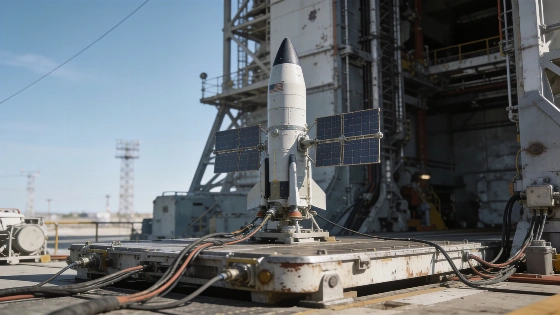
Rocket Lab, a company specializing in small satellite launches, has seen its stock price more than double since its initial recommendation by some analysts in 2025, despite a recent pullback. The company's Electron rocket remains a leader in the small orbital launch market, and its acquisition of Iridium has given it a foothold in satellite communications. With a contracted backlog of $2.2 billion-more than twice last year's figure-Rocket Lab is betting that its upcoming Neutron rocket will allow it to compete for larger, more lucrative missions currently dominated by SpaceX and Blue Origin. The company's five-year price target remains ambitious, but execution risk is high as it moves into a more capital-intensive phase.
AI Competition and Market Reactions
Advanced Micro Devices (AMD) reported a 50% year-over-year revenue increase in the second quarter, driven by a surge in data center demand and a strategic shift toward AI workloads. Data center revenue doubled, and the company's partnership with Anthropic-backed by a planned $5 billion equity investment-signals a deeper commitment to AI infrastructure. Yet, AMD shares fell sharply after SpaceX announced it would use only Nvidia chips for its AI needs, raising questions about AMD's ability to secure major design wins in a fiercely competitive market. Management's forecast of $13 billion in third-quarter revenue reflects optimism, but investors remain wary of how quickly rivals can erode AMD's momentum.
SpaceX itself reported a 92% jump in second-quarter revenue to $7.81 billion, with Starlink subscriber growth and AI-related sales both accelerating. Despite these gains, the company posted a net loss of $541 million, an improvement from the prior year but still a reminder of the capital intensity required to scale its infrastructure. SpaceX's plan to spend $18 billion on infrastructure and research over the next two quarters has unsettled some investors, even as CEO Elon Musk moved up his $1 trillion annual revenue target to 2030. The company's high-profile IPO has drawn intense scrutiny, and the stock's volatility reflects both excitement and skepticism about its long-term profitability.
Winners and Losers in Tech Earnings
Elsewhere in the tech sector, Arista Networks and Upstart both posted double-digit gains after reporting quarterly results that exceeded expectations. Arista's revenue reached $3 billion for the first time, cementing its position as the largest Ethernet switch vendor in the data center market. The company's rollout of a 1.6 terabit per second AI fabric platform underscores its focus on high-performance networking for AI applications. Upstart, which uses AI to automate consumer lending decisions, saw revenue jump 41.7% year over year and nearly tripled its net income. Both companies have benefited from the rapid adoption of AI-driven solutions, but investors are watching closely for signs that automation and conversion rates can be sustained as competition intensifies.
Shopify delivered a standout quarter, with revenue up 34% and free cash flow margins reaching 18%. Management now expects full-year revenue growth in the low thirties percentage range. Uber's revenue rose 12% in the second quarter, but the stock slipped as investors weighed the impact of robotaxi competition and the company's $14.8 billion acquisition of Delivery Hero. Disney reported a 7% increase in third-quarter revenue, driven by strong merchandise sales from Toy Story 5 and a rebound in Parks & Experiences revenue. The company's box office and consumer products performance helped lift the stock more than 4% in early trading.
Cycles Versus Trends in Tech Investing
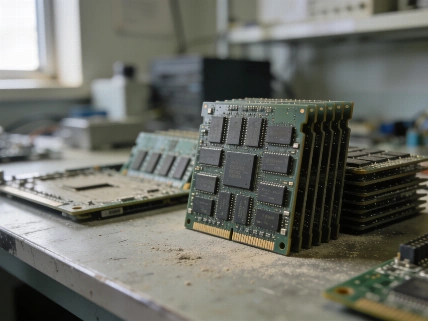
Recent market swings highlight the challenge of distinguishing between durable trends and cyclical patterns in technology and investing. For example, memory chip prices often follow a cycle: high prices spur new capacity, which eventually leads to oversupply and falling prices. In contrast, trends such as the shift to AI workloads or the expansion of satellite networks may persist longer, but even these can be disrupted by rapid changes in competition or technology. Investors who mistake a cycle for a trend-or vice versa-risk misjudging the durability of growth and the timing of reversals.
On August 5, 2026, the S&P 500 closed at 7,737, the Nasdaq at 26,585, and the Dow at 54,086, with Bitcoin trading near $64,000. These headline numbers mask significant dispersion beneath the surface, as sector leadership rotates and company-specific news drives sharp moves. For investors, the current environment demands careful attention to both the underlying business fundamentals and the broader forces shaping technology, capital spending, and consumer demand.
Understanding the difference between a trend and a cycle is crucial for investors evaluating technology stocks. A trend is typically driven by structural changes-such as demographic shifts or declining costs-that persist over time, while a cycle is characterized by recurring periods of expansion and contraction. Recognizing which forces are at play can help investors avoid overcommitting to temporary booms or missing out on longer-term opportunities. In fast-moving sectors like AI, space, and digital commerce, the ability to distinguish between these patterns may be as important as picking the right stocks.