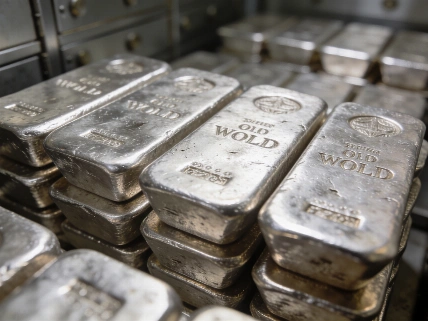
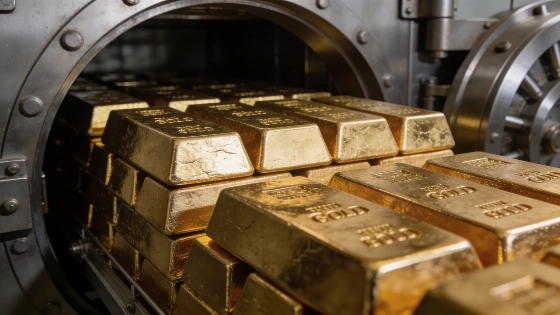
The Federal Reserve has raised interest rates for the first time in years. With stocks still expensive and uncertainty running high, investors are looking at gold again as a possible safe haven.
Gold is back in focus. The Federal Reserve just raised interest rates, and markets are still on edge. Stock prices remain high. Investors who remember when gold shot past $5,000 an ounce are watching as it hovers near $4,300. Many are asking if another surge is coming. With monetary policy shifting and global risks rising, people are taking a fresh look at gold and other safe bets.
On September 16, 2026, the Federal Reserve unanimously raised its target federal funds rate by 0.25 percentage points to a range of 3.75-4.00%.
How rate hikes affect gold
Rising rates do not always help gold. When the Fed started raising rates fast in early 2022 to fight inflation, gold prices actually dropped and ended the year flat. Still, gold did better than the S&P 500, which fell 19% that year. The situation now is different. Inflation is not at record highs, but markets face new threats-geopolitical shocks and pricey stocks.
Gold often looks better when people worry about other assets. High stock prices can make equities shaky. Political uncertainty can push investors toward safer places. Higher rates can make bonds and savings accounts more appealing than gold, but the bigger picture matters. If people lose faith in stocks or the economy, gold can still gain even when rates are up.
Safe-haven strategies and fund options
In the immediate aftermath of the Fed's September 2026 rate hike, gold prices initially spiked above $4,365 per ounce before dropping by about 1.2% to $4,240.10, with December futures closing at $4,387.50. This volatility reflected investor uncertainty and shifting expectations for further monetary tightening.
Investors are not just reacting to the Fed. Political events like the coming midterms and the ongoing fight over monetary policy add more uncertainty. If the Fed keeps raising rates or if political tensions get worse, gold demand could rise as people look to protect themselves from market and policy risks. As reported earlier, even funds known for taking risks have struggled to beat the S&P 500, showing how tough these markets are.
Risks and practical considerations
Anyone thinking about gold or gold funds needs to weigh a few things. Higher rates can push gold down, but not always-especially when other risks are in play. Timing matters. So do your own finances, risk appetite, and how long you plan to invest. Gold can help balance a portfolio, but it does not pay income and can swing in price.
The World Gold Council says global gold demand hit 4,741 metric tons in 2023. Investment demand made up a big part of that. More U.S. investors are using exchange-traded funds like GLD to get exposure. The fund's assets go up and down with gold prices and investor mood. Fees, taxes, and how easy it is to buy or sell should all be checked before jumping in.
Gold plays a different role than stocks or bonds. It does not pay dividends or interest. Its main job is to hedge against big risks, inflation, or currency swings. For some, gold is a way to steady their portfolio when markets get rough. For others, it is a bet on price moves. Knowing the difference is key before putting a lot of money into gold or gold funds.