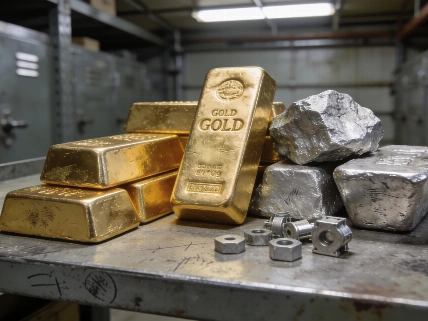

Gold's record run has retirement savers eyeing gold IRAs, but high fees, complex rules, and steep tax rates can quietly erode returns-especially compared to lower-cost gold ETFs
Gold's surge to new highs in 2025 and early 2026 has drawn a wave of interest from retirement investors, with the World Gold Council reporting that gold prices more than doubled from about $2,600 per ounce to $5,589 in just twelve months. This rally has fueled aggressive marketing by precious metals dealers, and retirement savers have responded by pouring money into gold exchange-traded funds (ETFs) and physical gold products. According to the World Gold Council, gold ETF holdings grew by 801 tons in 2025, the second-strongest year on record, while demand for gold bars and coins hit a 12-year high.
Hidden Costs of Gold IRAs
For investors considering a gold individual retirement account (IRA), the appeal of holding physical gold in a tax-advantaged account can be strong. But the structure of a gold IRA introduces layers of fees and logistical hurdles that standard brokerage accounts do not. Setting up a gold IRA requires a custodian, a precious metals dealer, and an IRS-approved depository vault. Each provider charges its own fees: account setup typically costs $50 to $150, annual custodian maintenance runs $75 to $300, and depository storage adds another $100 to $300 per year. These recurring charges can add up quickly, especially over decades.
The largest upfront cost is often the dealer markup-the premium charged above gold's spot price. For standard bullion, this typically ranges from 2% to 5%, but for collectible or numismatic coins, markups can soar to 40% or more. Regulatory actions have found some dealers charging as much as 130% above spot while advertising much lower rates. These costs can quietly erase a significant portion of any early gains, especially in years when gold prices are flat or declining.
No Income, Compounding Fees
Unlike stocks or bonds, physical gold held in a depository generates no income-no dividends, no interest. Every fee charged against the account is a direct drag on returns, and over time, these costs compound. For a $50,000 gold IRA, annual fees and storage can easily consume 0.4% to 1.2% of the balance each year, not counting dealer markups or transaction costs. Over a 20-year holding period, these charges can significantly reduce the real value of the investment.
Liquidity is another challenge. Selling gold from an IRA is more cumbersome than liquidating stocks or ETFs. The process requires coordination between the custodian, dealer, and depository, often taking days rather than seconds. Required minimum distributions (RMDs) for traditional IRAs add further complexity, as custodians must appraise each metal holding before calculating the withdrawal amount starting at age 73.
Tax Treatment: Gold IRAs vs. Gold ETFs
Tax rules for gold IRAs and gold ETFs differ in ways that can surprise investors. Gold ETFs backed by physical bullion are classified as collectibles by the IRS, meaning long-term capital gains are taxed at a maximum rate of 28%, higher than the 15% or 20% rate for most stocks and mutual funds. Withdrawals from a traditional gold IRA, however, are taxed as ordinary income, with rates that can reach up to 37% for high earners. Roth IRAs offer an exception: qualified withdrawals are generally tax-free, eliminating both the collectibles rate and ordinary income tax exposure.
For many investors, the combination of high fees, complex logistics, and potentially steep tax rates makes gold IRAs a costly way to gain exposure to gold. By contrast, gold ETFs held in a traditional or Roth IRA offer similar price exposure with far lower ongoing costs and easier liquidity. Leading gold ETFs such as the SPDR Gold MiniShares ETF and iShares Gold Trust charge annual expense ratios of 0.10% and 0.25%, respectively-well below the combined fees of a typical gold IRA.
How Much Gold Belongs in a Retirement Portfolio?
Financial planners generally recommend limiting precious metals to about 5% of a diversified retirement portfolio. This aligns with guidance from major wealth managers and test portfolios from research firms. While some investors prefer the direct ownership of physical gold that a self-directed gold IRA provides, most can achieve similar diversification and inflation-hedging benefits through gold ETFs at a fraction of the cost and complexity.
According to the Investment Company Institute, U.S. retirement assets in IRAs totaled $13.9 trillion at the end of 2025, with alternative assets like gold representing a small but growing share. As gold prices and marketing campaigns continue to attract attention, understanding the true costs and tax implications of different gold investment vehicles is critical for retirement savers weighing their options.
Gold IRAs may appeal to those seeking tangible assets, but the combination of upfront markups, annual fees, storage costs, and ordinary income tax treatment can steadily erode long-term returns. For most retirement investors, gold ETFs in a standard IRA or 401(k) offer a simpler, more cost-effective way to add gold exposure without the hidden trade-offs.
While gold's role as a hedge against inflation and market volatility is well established, the mechanics of investing in gold through retirement accounts are often misunderstood. Gold IRAs require careful scrutiny of all fees, markups, and tax consequences before committing retirement savings. As with any investment, suitability depends on individual goals, risk tolerance, and time horizon.
For those considering gold as part of their retirement strategy, comparing the total cost, liquidity, and tax treatment of gold IRAs versus gold ETFs can help avoid costly surprises down the road.
Gold's appeal as a store of value and portfolio diversifier is rooted in its historical resilience during periods of inflation and market stress. But the way investors access gold-whether through physical bars and coins in a self-directed IRA or through low-cost ETFs-can have a major impact on long-term outcomes. Understanding the trade-offs between direct ownership and fund-based exposure is essential for making informed retirement decisions.