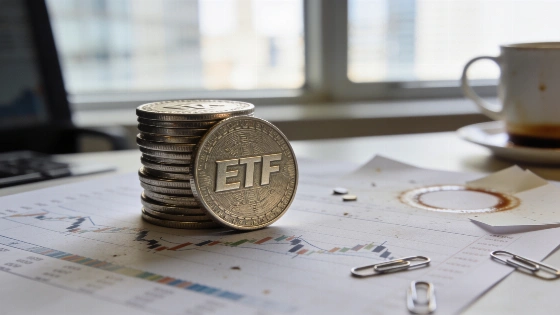
The Invesco S&P 500 Equal Weight ETF has surpassed $100 billion in assets, as investors seek diversification and reduce reliance on mega-cap tech stocks amid shifting market leadership.
Investor flows into the Invesco S&P 500 Equal Weight ETF (RSP) have reached record levels, indicating a shift away from the dominance of mega-cap technology stocks in U.S. equity markets. The RSP, which assigns equal weight to each S&P 500 constituent, surpassed $100 billion in assets under management in August 2026, following more than $12 billion in net inflows since the start of the year, according to CNBC and ETF Database. This trend reflects increased demand for diversification as the performance gap between the largest tech companies and the broader market narrows.
ETF Database reported that RSP saw additional inflows in July and continued to grow in August 2026, highlighting sustained investor interest beyond the initial milestone.
Market concentration remains elevated, with the 10 largest S&P 500 companies accounting for nearly 40% of the index by mid-2025, a level not seen since the 1960s, according to S&P Dow Jones Indices. Despite significant capital expenditures on artificial intelligence-Microsoft, Alphabet, Meta, and Amazon are projected to spend $725 billion on AI infrastructure in 2026, per Financial Times-investors are increasingly focused on profitability. FactSet estimates the Magnificent Seven will post 22.8% earnings growth in the fourth quarter of 2026, below the 25.3% expected for the other 493 S&P 500 companies. Valuations remain high, with the group trading at 25.8 times forward earnings in February, compared to 21.8 times for the broader index, according to Yardeni Research.
CNBC notes that the surge in demand for equal-weight ETFs like RSP is not just a short-term rotation but reflects a broader shift in investor behavior away from excessive concentration in mega-cap tech stocks. This trend is supported by the fact that, as of August 2026, RSP outperformed the cap-weighted S&P 500 by about 3 percentage points year to date, indicating a move toward greater market breadth and diversification.
Long-term performance data highlight the trade-offs: Over the five years ending March 31, 2026, VOO returned about 76% cumulatively, while RSP returned roughly 47%, according to Vanguard and Invesco. Over a 10-year period, a $10,000 investment with reinvested distributions would have grown to approximately $37,460 in VOO versus $28,940 in RSP. While RSP typically offers a higher dividend yield, the advantage varies depending on the measurement period and methodology.
The recent surge in equal-weighted ETF inflows coincides with a broadening of market leadership. FactSet projects that companies outside the Magnificent Seven will outpace the group in earnings growth by the fourth quarter of 2026. However, equal-weighted strategies tend to lag when a small number of large companies dominate returns. Investors allocating to RSP at its $100 billion milestone are effectively betting on sustained market breadth and a more even distribution of earnings growth across the S&P 500.
Rapid advances in artificial intelligence are also influencing market dynamics and investment decision-making. A recent analysis of Wall Street's AI adoption highlights concerns that technology could disrupt traditional investment analysis, even as it creates new opportunities for portfolio construction and risk management.
Equal-weighted funds like RSP offer reduced exposure to the largest stocks and can help cushion portfolios during shifts in market leadership. However, they come with higher turnover, increased trading costs, and the potential for lower long-term returns if mega-cap outperformance resumes. Investors should carefully consider these factors in light of their investment objectives, risk tolerance, and time horizon.