
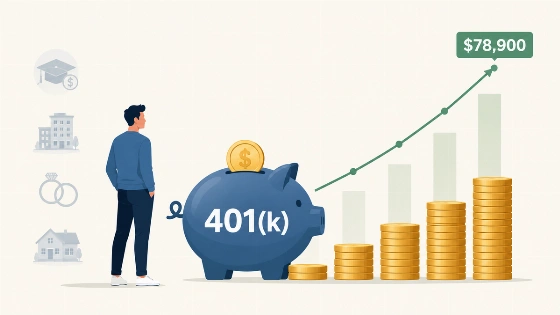
The typical 401(k) balance for Americans in their 30s is now $78,900, but competing financial demands and access to retirement plans can make saving a challenge for many in this age group
For Americans in their 30s, building retirement savings often competes with other major financial priorities—student loans, rent, weddings, and the costs of buying a first home. Yet, according to 2026 data from Empower, the median 401(k) balance for workers in this age group stands at $78,900. This figure represents the midpoint: half of 30-something savers have more, and half have less. While this balance is higher than what is typical for workers in their 20s, it still trails the amounts held by older employees who have had more years to contribute and benefit from investment growth.
Why Saving for Retirement Is Difficult in Your 30s
Not every worker in their 30s has access to a 401(k) or similar workplace retirement plan. Some save through IRAs or other accounts, which are not included in Empower’s median unless linked to a 401(k). The ability to save is also shaped by income, job stability, and the burden of non-mortgage debt. For those who do participate, the IRS allows up to $24,500 in annual 401(k) contributions for workers under 50 in 2026, providing an opportunity to accelerate savings when possible.
Financial firms such as Fidelity and Vanguard report similar age-based patterns in 401(k) balances, reinforcing the importance of starting early. The power of compound growth means that dollars invested in your 30s can multiply over decades, even if initial contributions feel modest. Fidelity’s guidance suggests aiming to have three times your annual salary saved by age 40 to stay on track for retirement, though individual circumstances vary widely.
How to Grow a 401(k) Balance Faster
For those looking to boost their 401(k) balances, strategies include paying down high-interest debt, increasing contributions when receiving a raise, and making full use of any employer match. Following a realistic budget can also help free up cash for retirement savings. The Rule of 72—a simple formula for estimating how long it takes an investment to double at a given rate of return—illustrates why time in the market is a critical advantage for younger savers.
While 401(k) balances are a key part of retirement planning, they are only one piece of the puzzle. Many savers also consider the role of cash reserves, taxable brokerage accounts, and other vehicles. For those weighing where to keep short-term savings, money market accounts have recently offered yields near 4%, as discussed in our analysis of how much interest $1,000 can earn in a money market account.
What National 401(k) Figures Reveal
According to the Investment Company Institute, as of the end of 2025, total U.S. 401(k) plan assets reached $8.1 trillion, with more than 60 million active participants. The median balance for all 401(k) participants remains well below the average, reflecting the impact of early withdrawals, job changes, and periods without contributions. These figures highlight the importance of consistent saving and the challenges many workers face in building retirement security.
Why Starting Early Makes Compound Growth More Powerful
Compound interest is a foundational concept in retirement investing. When you contribute to a 401(k), your money can grow not just from your own deposits, but also from investment returns that themselves generate additional earnings over time. The earlier you start, the more years your savings have to benefit from this compounding effect.
Even small increases in contribution rates can make a significant difference over a multi-decade career, especially when combined with employer matching and disciplined investing through market ups and downs.