Nvidia's record-breaking AI chip sales are under fresh scrutiny as U.S. regulators consider tighter controls on overseas data center access, raising compliance costs and global risks for investors
Nvidia's explosive growth in AI chip sales has made it a Wall Street favorite, but a new regulatory threat is emerging that could reshape the company's global business. The chipmaker recently reported first-quarter revenue of $81.6 billion for fiscal 2027, up 85% from the prior year, with data center sales accounting for more than 90% of the total. Nvidia's outlook for the next quarter is strong, projecting around $91 billion in revenue and gross margins near 75%. Yet, these forecasts already exclude any data center computing revenue from China, reflecting the impact of U.S. export controls.
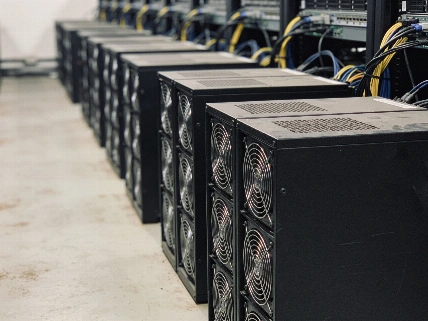
While Nvidia has so far managed to offset the loss of Chinese data center sales with surging demand elsewhere, a new risk has surfaced. According to CNBC, the White House alleges that Chinese AI startup Moonshot AI acquired servers equipped with Nvidia's GB300 processors and deployed them in Thailand, likely to train advanced AI models. Although there is no evidence Nvidia knowingly violated export rules, the incident highlights a loophole: companies can access restricted U.S. technology remotely, bypassing physical export bans.
Regulatory Pressure Builds
This development has caught the attention of U.S. policymakers, who are now considering whether to extend export controls to cover not just the sale and shipment of chips, but also remote access to high-performance computing resources abroad. The House of Representatives passed the Remote Access Security Act in January, which would give federal authorities explicit power to regulate foreign remote access to controlled U.S. technology. The bill is now under review in the Senate Banking Committee.
For Nvidia, the risk is that what began as a China-specific sales issue could become a broader global compliance challenge. If Washington moves to regulate cloud providers, overseas data centers, or remote users of Nvidia hardware, the company could face higher compliance costs, more complex customer vetting, and tighter restrictions on where and how its most advanced chips are deployed. The White House's AI Action Plan also calls for enhanced location verification and monitoring of vulnerable technologies, signaling that enforcement could soon become more aggressive.
Financial Impact and Competitive Risks
Despite these regulatory headwinds, Nvidia's core business remains robust. The company posted net income of $58.3 billion for the quarter, with diluted earnings per share up 214% year over year to $2.39. Its official filings acknowledge that the current regulatory environment effectively blocks it from competing in China's data center computing market, and warn that this absence could allow rivals to build stronger ecosystems for developers and customers.
While the Moonshot AI case does not pose an immediate threat to Nvidia's earnings, the risk lies in potential second-order effects. If U.S. authorities expand export controls to cover remote access, Nvidia's global customer base-including cloud providers and international data centers-could face new hurdles. This could slow deployment, increase compliance costs, and make it harder for Nvidia to maintain its lead in the AI hardware market. As recent analysis of Nvidia's stock volatility shows, regulatory uncertainty is already a factor in investor sentiment.
Policy Response and Industry Implications
The Commerce Department has already begun requiring case-by-case licensing for certain high-end chip exports to China, with conditions that include customer screening and security measures. If similar requirements are extended to remote access or cloud-based deployments, Nvidia and its partners may need to invest in new monitoring systems and compliance infrastructure. The company's quarterly filings caution that these changes could have a material impact on its financial results and competitive position.
For investors, the key question is whether U.S. regulators will stop at targeting specific Chinese companies or move to impose broader controls on global AI infrastructure. The Moonshot AI episode demonstrates both the value of Nvidia's technology and the difficulty of enforcing export restrictions in a world where computing resources can be accessed from anywhere. As the regulatory landscape evolves, Nvidia's ability to adapt will be closely watched by the market.
In the first quarter of fiscal 2027, Nvidia's data center revenue surged 92% to $75.2 billion, reflecting the company's dominance in supplying hardware for AI training and deployment. The company's Blackwell Ultra GPUs, featured in the GB300 NVL72 systems, are among the most sought-after chips for large-scale AI models. However, the company's own filings warn that being shut out of China could allow competitors to gain ground, especially if U.S. rules make it harder for Nvidia to serve international customers efficiently.
As U.S. policymakers weigh new rules, Nvidia's experience highlights the growing tension between national security concerns and the global nature of the AI industry. Investors should be prepared for further regulatory developments that could affect not just Nvidia, but the entire ecosystem of companies building and deploying advanced AI systems worldwide.
Export controls are a longstanding tool of U.S. technology policy, but their effectiveness is increasingly challenged by the rise of cloud computing and remote access. Unlike traditional hardware exports, cloud-based AI services allow users in restricted countries to tap into powerful computing resources without importing physical chips. This creates a regulatory gray area that lawmakers are now moving to address. For companies like Nvidia, staying ahead of both market demand and evolving compliance requirements will be critical to sustaining growth in the years ahead.