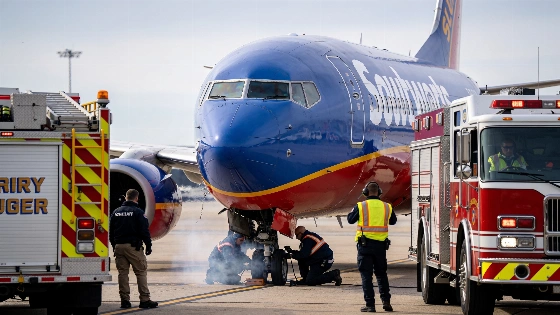
A Southwest Airlines jet arriving at Chicago Midway faced a nose gear tire failure, leading to a smoky, jarring landing. No injuries were reported, but the incident highlights operational risks and the importance of airline maintenance protocols.
Travelers on Southwest Airlines Flight 1243 experienced an unexpected jolt Monday morning when the aircraft's nose gear tires lost air pressure during landing at Chicago Midway International Airport. The flight, operating as "California One" from Fort Myers, Florida, touched down around 7 a.m. and was quickly surrounded by emergency crews as smoke was seen coming from the front landing gear. While no injuries occurred, the event underscores the operational risks airlines face and the importance of robust maintenance and emergency response procedures.
According to reporting by WLS, the aircraft was brought to a stop on the runway, and passengers described the landing as unusually rough, with the smell of burnt rubber noticeable in the cabin. Mechanics replaced the damaged tires on the tarmac, and the plane was towed to the gate for passenger disembarkation. Southwest Airlines stated that both nose gear tires lost air pressure upon landing, but did not provide further details on the cause or whether similar issues have occurred on other flights.
While tire failures on commercial jets are rare, they can pose significant safety and operational challenges. The Federal Aviation Administration (FAA) requires airlines to adhere to strict inspection and maintenance schedules for landing gear components, including tires, to minimize the risk of in-flight or landing incidents. In this case, the rapid response by airport emergency services and airline mechanics helped prevent injuries and further complications.
According to the Bureau of Transportation Statistics, U.S. airlines reported 1,301 on-ground aircraft incidents in 2023, with tire-related issues accounting for a small fraction of those events. Most tire failures are contained without injury, but each incident prompts a review of maintenance records and operational procedures to ensure compliance with federal safety standards. The FAA may investigate the Midway incident to determine if additional oversight or corrective action is warranted.
For passengers, such events can be unsettling, but they also highlight the layers of safety protocols in place across the aviation industry. Airlines are required to report mechanical issues and cooperate with regulators to address any underlying causes. Travelers concerned about flight safety can review airline maintenance records, which are publicly available for major carriers, and may consider travel insurance policies that cover delays or disruptions caused by mechanical problems.
Aircraft tire maintenance is a critical but often overlooked aspect of airline safety. Commercial jet tires are engineered to withstand extreme loads and temperatures, but they are subject to wear and damage from repeated takeoffs and landings. Airlines typically replace tires after a set number of cycles or when inspections reveal signs of stress, cuts, or pressure loss. The FAA mandates regular checks and immediate replacement of any tire showing abnormal wear or damage. While most tire issues are detected before they become hazardous, unexpected failures can still occur, making rapid response and transparent reporting essential for maintaining public trust in air travel safety.