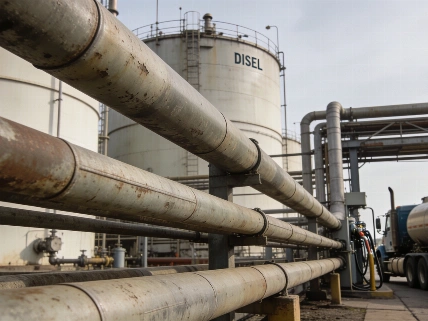
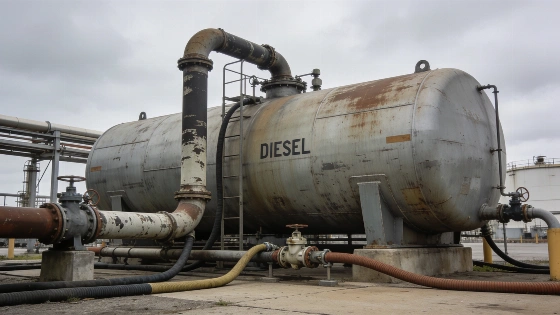
Diesel reached $6.53 a gallon as the Strait of Hormuz closure disrupted energy supplies. Trump has floated limiting exports, but refinery responses could blunt any U.S. price relief while tightening global supply.
The United States produces about 5.3 million barrels of distillate a day, more than it uses at home. That includes diesel and heating oil. But a proposed export curb could prompt refiners to cut output instead of sending more fuel to U.S. buyers.
Any price relief could be brief. The figures available do not show that an export curb would fix the supply shock.
On Sept. 23, the White House rejected reports that it was preparing a 90-day diesel-export ban, saying no such decision had been made.
The export lever
President Donald Trump publicly backed the idea on Sept. 22. He has floated keeping more U.S.-produced diesel at home as fuel prices rise ahead of the November 2026 elections, according to a Reuters report on Trump's endorsement.
The Energy Information Administration says the United States produces about 5.3 million barrels of distillate each day and consumes about 3.6 million barrels. On paper, that leaves room to redirect fuel to U.S. buyers. But if export outlets disappear, refiners may not keep producing at the same rate.
AAA put diesel at a record $6.53 per gallon on Sept. 22, roughly 77% above the year-earlier level. The closure of the Strait of Hormuz has disrupted the flow of about one-fifth of the world's crude oil supply. That points to a global supply shock, not just a shortage caused by U.S. exports.
On Sept. 23, Energy Secretary Chris Wright said a full export ban would not work and could raise gasoline and jet-fuel prices. He said the administration was discussing only voluntary measures with refiners, according to a Reuters report of Wright's warning.
On Sept. 23, U.S. diesel futures fell about 4% after reports of a possible export ban. By Sept. 25, traders were also weighing the risk that export restrictions could curb refinery runs and widen the WTI discount to Brent.
The Dow Jones Industrial Average, S&P 500 and Nasdaq Composite were also reported higher by 0.93%, 0.51% and 0.48%, respectively. Stock gains do not shield businesses or households from expensive fuel. The figures do not show how long markets can absorb that pressure.
Why relief could fade
A partial or full export ban could leave more distillate in the United States and lower domestic prices for a time. But refiners such as ExxonMobil and Chevron would have a commercial reason to respond to the surplus. They could cut production toward domestic demand rather than keep making fuel that pushes U.S. prices down.
The expected price benefit could then fade. By Sept. 25, Washington was considering voluntary export limits instead of a hard ban. Wright had contacted executives at major refiners to assess support for the approach, Reuters reported.
Overseas, prices could move higher. The report's figures say removing as much as 1.5 million barrels a day of U.S. diesel exports would disrupt established supply routes. Prices abroad could rise, and rerouted shipments could add costs.
That outcome is not certain in every market. But withdrawing a substantial export supply while the Hormuz disruption continues carries a direct risk.
Investors have been watching record fuel prices and market volatility. A related market report examined the diesel jump alongside Warren Buffett's caution. An export restriction would add another policy factor. It would not end the underlying supply interruption.
The disruption remains
The article attributes a three-year high 12-month inflation rate of 4.2% in May primarily to the Iran war and the continuing closure of the Strait of Hormuz. It also describes core inflation, which excludes food and energy, as persistently elevated.
Diesel adds pressure for businesses and consumers. The disruption affects a fifth of global crude supply, and the account provided describes no immediate repair.
Even a peace agreement would not quickly restore regional energy infrastructure to its pre-war capacity. The article says it would take months to ramp production back up.
That delay matters. Crude supply, refinery output and export policy are separate parts of the fuel chain. An export curb can change where available diesel goes. It cannot restore crude flows or erase the time needed to rebuild disrupted capacity.
An export curb may offer temporary relief at home, but it could tighten global supply. The main driver of record diesel prices would remain.