Alphabet acquires Spirit Aviation Holdings' vast trove of business data for $10 million to train AI, while Tesla eyes a driverless Cybercab launch and Meta faces a high-stakes child-safety trial with billions on the line
Major U.S. tech and healthcare companies are making bold moves that could reshape how data, automation, and regulation intersect with business and investing. Alphabet is betting on real-world corporate data to fuel its artificial intelligence ambitions, Tesla is preparing to test fully driverless vehicles on public roads, and Meta faces mounting legal and financial risks over its platforms' impact on children. Meanwhile, market volatility is being driven by rising Treasury yields and oil prices, and a medical technology company is defying skeptics with strong growth and vertical integration.
These developments highlight the growing value of proprietary data, the shifting business models in technology, and the regulatory and market headwinds facing some of the world's most influential companies.
Alphabet's Data Acquisition Raises New Questions
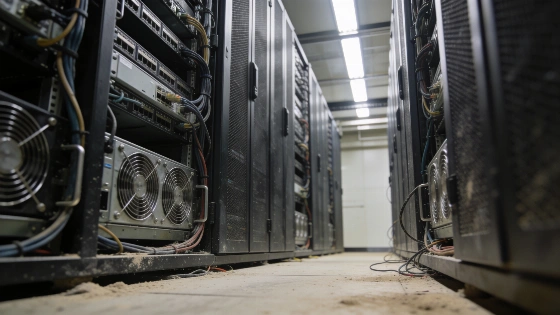
Alphabet's $10 million purchase of Spirit Aviation Holdings' digital assets in a bankruptcy auction marks a new phase in the race for high-quality data to train artificial intelligence models. The acquisition includes 100 million emails, 500 million Microsoft Teams messages, 30 million lines of code, and 175,000 employee records spanning four decades. For Alphabet, the cost is negligible compared to its balance sheet, but the value lies in the rarity of such labeled, real-world enterprise data-far more difficult to obtain than public web content.
This move signals a potential trend: as more distressed companies liquidate, their digital records could become a sought-after commodity for AI development. However, the practice is likely to draw increased scrutiny from regulators and privacy advocates, especially if sensitive employee or customer information is used to train commercial AI systems. Any future regulatory pushback could raise the cost and complexity of similar deals, but the demand for authentic data is unlikely to disappear.
Tesla's Driverless Ambitions and Market Shifts
Tesla is reportedly preparing to launch its driverless Cybercab in Austin, Texas, with employees expected to be the first to ride in fully autonomous vehicles on public roads. If successful, this would mark a significant milestone for the company, which has repeatedly promised to deliver full self-driving capabilities. The rollout could also accelerate Tesla's transition from a capital-intensive manufacturing business to a software-driven, high-margin platform model, as it seeks to monetize its Full Self-Driving (FSD) technology through ride-hailing networks and licensing.
For investors, the shift toward software and services could mean higher margins and more resilient revenue streams, but it also introduces new regulatory, safety, and competitive risks. The company's ability to deliver on its self-driving promises remains a key variable for its long-term valuation.
According to Tesla's Q2 2026 earnings report, the company generated $25.1 billion in revenue for the quarter, with automotive gross margin at 18.2%. The company continues to invest heavily in AI and autonomous driving, with research and development expenses reaching $1.2 billion for the period.
Market Volatility and Legal Risks for Tech Giants
Nasdaq futures fell nearly 1% in pre-market trading as U.S. Treasury yields climbed and geopolitical tensions pushed oil prices above $90 per barrel. Higher yields increase borrowing costs and reduce the present value of future profits, which tends to weigh on growth-oriented technology stocks. The 30-year Treasury yield recently topped 5.3%, its highest level in almost 20 years, while the 10-year yield approached 4.74%.
Meta Platforms is facing a major legal challenge as it goes to trial in California, where a coalition of states alleges that Facebook and Instagram were intentionally designed to be addictive to children. The company has already been ordered to pay nearly $1 billion in a similar case in New Mexico, and states are now seeking as much as $200 billion in nationwide damages. Meta's core business-98% of its revenue comes from advertising-relies on engagement-driven algorithms that are now under legal scrutiny. Any ruling that forces Meta to alter or remove these algorithms could have a significant impact on its ad targeting and revenue model.
TransMedics' Growth and the Value of Vertical Integration
TransMedics, a medical technology company specializing in organ transport, has rebounded from a sharp stock decline to deliver record revenue and expand its operational footprint. Its Organ Care System allows donor organs to remain viable longer, and the company now operates its own fleet of 22 aircraft, handling 86% of missions internally. This vertical integration not only improves logistics but also strengthens its competitive moat.
In the most recent quarter, TransMedics reported $190 million in revenue, up 21% year-over-year, and raised its full-year guidance. The company is investing in new aircraft, a European hub, and a kidney program, prioritizing long-term growth over short-term margins. Major institutional investors, including Fidelity, have taken significant positions in the stock, reflecting confidence in its business model and growth prospects.
The pursuit of proprietary data, whether for AI or healthcare, underscores a broader shift in how companies seek to differentiate themselves. As regulatory scrutiny intensifies and market conditions remain volatile, firms that control unique assets-be it data, technology, or infrastructure-may be better positioned to weather uncertainty. For investors, understanding the risks and rewards of these strategies is essential, especially as legal, ethical, and operational challenges evolve alongside technological innovation.