
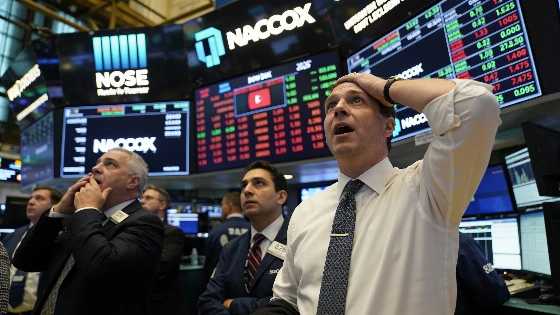
The Dow Jones rebounded 0.46% to 51,947 as energy prices eased and real estate stocks gained, but tech shares dragged the Nasdaq lower and investor sentiment hit a bullish extreme, raising questions about market risk and portfolio positioning
U.S. stocks ended the week with mixed results as the Dow Jones Industrial Average climbed 0.46% to 51,947, partially reversing Thursday's losses. The S&P 500 inched up 0.05% to 7,412, while the Nasdaq Composite fell 0.64% to 24,976, weighed down by continued weakness in technology shares. Real estate and financial services stocks led the day's gainers, while the tech sector dropped 2.37% as investors reassessed the outlook for high-growth companies.
Gold prices edged up 0.15% to $4,056.30 at the close, reflecting a modest move toward safe-haven assets. The yield on the 10-year Treasury note slipped 0.02 percentage points to 4.68%, signaling a slight uptick in demand for government bonds. Meanwhile, West Texas Intermediate (WTI) crude oil retreated 2.25% to $90.12 per barrel, easing some inflation concerns and providing relief to sectors sensitive to energy costs.
Tech Sector Faces Renewed Pressure
Technology stocks continued to underperform, with Intel shares dropping 6.5% despite beating quarterly earnings expectations. Sandisk Corporation tumbled nearly 11%, mirroring declines across memory chip makers. Space Exploration Technologies also lost ground ahead of a key test flight, adding to the sector's volatility. The S&P 500 closed lower for the second consecutive week, and the Nasdaq has now declined almost 2% over the past month, reflecting persistent investor caution toward high-growth and AI-related names.
Recent trading has highlighted the market's sensitivity to both company-specific news and broader macroeconomic signals. As reported in a recent Financial Sumo analysis of tech sector headwinds, rising oil prices and disappointing earnings from major technology firms have contributed to the sector's underperformance and increased volatility in growth stocks.
Investor Sentiment and Market Risks
Bank of America's Bull & Bear Indicator, which tracks investor sentiment across fund flows, hedge fund positioning, and market breadth, reached its highest level since 2021. This strong sell signal suggests that bullishness has become extreme, a pattern that has sometimes preceded market pullbacks in the past. While not a guarantee of an imminent correction, such sentiment readings often prompt professional investors to reassess risk exposure and rebalance portfolios.
Despite the Dow's recovery and a modest uptick in the S&P 500, underlying risks remain. Ongoing disruptions to global oil supply chains and the introduction of new tariffs have added uncertainty to the inflation outlook. At the same time, concerns about the sustainability of elevated spending on artificial intelligence and technology infrastructure continue to weigh on growth-oriented stocks.
Portfolio Implications and Practical Considerations
For individual investors, the current environment underscores the importance of diversification and risk management. While a balanced portfolio of high-quality assets has historically helped build wealth over time, periods of heightened volatility and extreme sentiment can test even disciplined strategies. Reviewing asset allocation and ensuring comfort with current risk levels may be prudent, especially as market signals become more mixed.
According to data from S&P Dow Jones Indices, the S&P 500's year-to-date return remains positive, but sector performance has diverged sharply, with real estate and financials outperforming technology and consumer discretionary stocks in recent weeks. Treasury yields, while off their recent highs, continue to influence borrowing costs and valuations across asset classes.
Investor sentiment indicators, such as the Bull & Bear Index, are designed to capture shifts in market psychology that may not be immediately visible in price movements. While these tools can help identify periods of excessive optimism or pessimism, they are not precise timing mechanisms. For most investors, maintaining a long-term perspective, regularly reviewing holdings, and avoiding dramatic portfolio changes in response to short-term swings remain sound practices, especially when market signals are sending mixed messages.