
Reaching a $100,000 investment portfolio is less about high income or perfect timing and more about steady monthly contributions, discipline, and letting compounding work over time
For many new investors, the idea of accumulating a $100,000 portfolio can feel out of reach. Yet the path to this milestone is often less about luck or market timing and more about consistent investing, patience, and understanding how compounding works. Rather than focusing on picking the next big stock or waiting for the perfect moment, the most reliable results come from a disciplined approach and a clear plan for regular contributions.
Even modest monthly investments can add up significantly over time, especially when returns are reinvested. The key is to set realistic expectations, stick to a schedule, and avoid letting short-term market swings derail your long-term strategy.
How Much to Invest Each Month
Building a $100,000 portfolio from scratch depends on how much you can invest and how long you're willing to let your money grow. Assuming a starting balance of zero and an average annual return of 10%-roughly in line with the long-term historical performance of the S&P 500-reaching $100,000 in 10 years would require investing about $490 per month. If you extend your time horizon to 20 years, the monthly contribution drops to around $130. Stretching it to 30 years lowers the required monthly investment to just $45.
This math highlights the power of compounding: the earlier you start, the less you need to contribute each month to reach the same goal. Early contributions have more time to generate returns, which then compound on themselves, accelerating growth in later years. While these figures are based on historical averages and actual returns will vary, the principle remains-time and consistency are powerful allies for investors.
According to data from S&P Dow Jones Indices, the S&P 500's average annual total return from 1926 through 2023 was approximately 10%, though individual years can see wide swings. In 2023, for example, the S&P 500 returned about 24%, while 2022 saw a decline of roughly 18%.
Why Consistency Beats Timing
Many investors are tempted to pause contributions or try to time the market during periods of volatility. But market corrections-defined as declines of 10% or more-are a regular feature of investing, typically occurring every year or two. Bear markets, with drops of 20% or more, are less frequent but still part of the landscape.
Trying to avoid downturns often leads to missed opportunities, as it's nearly impossible to predict when markets will rebound. Sticking to a regular investment schedule, regardless of market conditions, allows investors to buy shares at a range of prices-including during downturns, when valuations may be more attractive. This approach, known as dollar-cost averaging, can help smooth out the impact of volatility over time.
The Role of Compounding and Diversification
Once your portfolio reaches $100,000, compounding can accelerate growth even if you stop adding new money. For example, a 10% return on $100,000 generates $10,000 in a single year-more than many investors contribute annually. At this stage, investment returns begin to play a larger role in portfolio growth than new contributions.
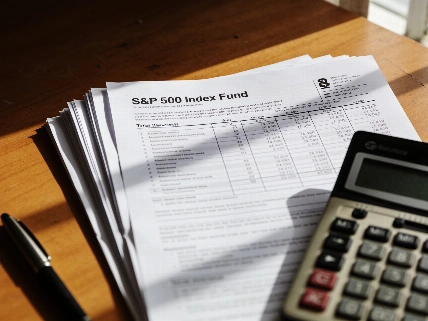
Investors don't need to pick individual stocks to benefit from this effect. Low-cost index funds, such as the Vanguard S&P 500 ETF (VOO), offer broad diversification and have historically delivered returns in line with the overall market. Diversification helps reduce the risk that any single company or sector will drag down your results, making it easier to stay invested through market ups and downs.
Compounding is the process by which investment earnings generate their own earnings over time. The longer your money remains invested, the more pronounced this effect becomes. This is why starting early-even with small amounts-can be more effective than waiting to invest larger sums later in life. While no investment is without risk, and past performance does not guarantee future results, a disciplined, diversified approach gives investors the best chance to reach long-term goals.