
Jim Cramer urges retirees to focus on compounding, not trading, and outlines a three-part portfolio approach that balances index funds, select stocks, and insurance assets to help manage risk and long-term growth
For Americans planning for retirement, the challenge is less about chasing the next hot stock and more about building lasting wealth through disciplined investing. Jim Cramer, host of CNBC's "Mad Money," has long argued that most retirees and near-retirees undermine their financial futures by trading too frequently and ignoring the power of compounding. Instead, he recommends a three-part portfolio framework designed to balance growth, risk, and stability over the long haul.
Compounding Over Trading
Cramer's core message is that trading for short-term gains rarely leads to sustainable retirement wealth. He points out that frequent buying and selling not only increases the risk of losses but also triggers higher taxes. In the U.S., investments held for less than a year are typically taxed at ordinary income rates, which can be significantly higher than the long-term capital gains rates applied to assets held for more than a year. Every unnecessary sale can create a new tax bill, eroding returns that could have compounded over time.
Instead, Cramer encourages investors to "get in and stay in," allowing their money to grow through the steady accumulation of returns. This approach is especially relevant for retirees, who often need their portfolios to last for decades and may not have the time or risk tolerance to recover from major losses.
Index Funds as the Foundation
At the heart of Cramer's strategy is a substantial allocation to broad-based index funds, such as those tracking the S&P 500. Index funds offer instant diversification and typically carry lower fees than actively managed funds. According to S&P Global, 79% of actively managed large-cap funds underperformed the S&P 500 in 2025, reinforcing the argument for passive investing. Warren Buffett has also advocated for index funds as a sensible choice for most investors, a rare point of agreement between two high-profile market voices.
Consistent contributions to index funds can have a powerful effect over time. For example, investing $20 per week for 30 years at a hypothetical 10% annual return would grow to more than $179,000, based on calculations from Moneywise. While actual returns will vary and markets do not deliver fixed annual gains, the example illustrates the impact of compounding when investors stick to a disciplined plan.
Selecting Individual Stocks
While index funds provide a solid base, Cramer believes that holding a handful of carefully chosen individual stocks can help investors outperform the market and potentially accelerate retirement timelines. He suggests allocating 45% to 50% of a portfolio to five individual stocks, focusing on companies with innovative products, durable competitive advantages, consistent earnings growth, and strong management. For younger investors, one or two speculative picks may be appropriate, given their longer time horizon to recover from setbacks.
Key criteria for long-term stock selection include the ability to remain relevant for decades, barriers to competition, and a large, stable market. Investors should also look for management teams with a proven track record and companies that have demonstrated resilience across multiple economic cycles.
Insurance Assets: Gold and Bitcoin
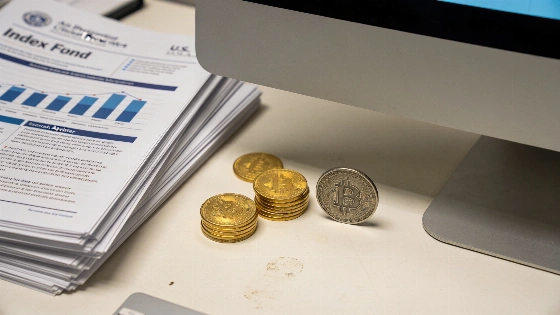
The final piece of Cramer's framework is a small allocation-typically 5% to 10%-to what he calls "insurance assets." These are investments that may help cushion a portfolio during periods of market stress. Gold, a traditional store of value, has historically attracted investors during times of inflation, economic uncertainty, or currency weakness. In the past year, gold prices rose about 30% as investors sought safe-haven assets, according to APMEX.
Bitcoin, while newer and more volatile, is sometimes compared to gold due to its capped supply of 21 million coins. Yet, Bitcoin's price swings can be extreme, and its value depends entirely on market demand. In August 2025, Bitcoin traded around $63,880, down more than 46% from a year earlier, based on CoinMarketCap data. Cramer himself has expressed caution about Bitcoin's long-term security, especially after concerns were raised about quantum computing's potential impact on cryptocurrency cryptography. For these reasons, he recommends keeping exposure to such assets limited and using them primarily for diversification, not as core holdings.
Neither gold nor Bitcoin generates dividends or cash flow, so their role is to provide a hedge rather than income. The goal is to reduce overall portfolio risk, not to make these assets the centerpiece of a retirement plan.
Balancing Growth and Risk
Cramer's three-part approach-index funds for stability, select stocks for growth, and insurance assets for diversification-aims to help retirees and would-be retirees avoid the pitfalls of emotional trading and short-term speculation. The framework is straightforward but requires patience, discipline, and a willingness to stay invested through market ups and downs.
For those interested in how broader market moves can affect retirement portfolios, recent coverage of record highs in the S&P 500 and Dow highlights the importance of understanding both the risks and opportunities in today's market environment. For more on how shifting Federal Reserve guidance is influencing investor behavior, see this analysis of recent stock market records and policy changes: how Fed policy shifts are impacting stock market records.
According to the Investment Company Institute, U.S. retirement assets reached $38.6 trillion at the end of 2025, with mutual funds and ETFs accounting for a significant share. The average expense ratio for equity index mutual funds was 0.05% in 2025, compared to 0.66% for actively managed equity funds, underscoring the cost advantage of passive investing. Meanwhile, gold's spot price closed 2025 at roughly $2,400 per ounce, and the S&P 500 delivered a total return of 24.2% for the year, according to S&P Dow Jones Indices.
Asset allocation is a central concept in retirement planning. The mix of stocks, bonds, cash, and alternative assets determines not only the potential for growth but also the level of risk a portfolio carries. While index funds offer broad market exposure and low fees, individual stocks can introduce both higher upside and greater volatility. Insurance assets like gold and Bitcoin may help buffer against market shocks, but they come with their own risks and do not produce income. The right balance depends on an investor's age, risk tolerance, income needs, and long-term goals. Regular portfolio reviews and rebalancing can help ensure that the allocation remains aligned with changing circumstances and market conditions.