South Korea's KOSPI has seen daily swings of up to 10% as retail investors pile into leveraged ETFs and market gains concentrate in a handful of AI-linked stocks-raising red flags for U.S. investors exposed to similar trends in the S&P 500 and Nasdaq
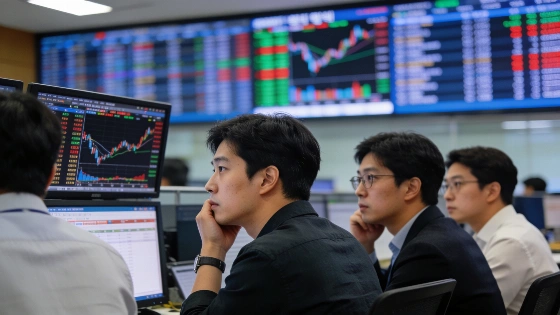
Extreme volatility in South Korea's KOSPI Composite Index is drawing attention from global investors, as the index has posted daily moves between 2% and 10% in most sessions since early June. The turbulence is being fueled by a combination of heavy concentration in a few technology stocks and a surge in retail trading of leveraged exchange-traded funds (ETFs). For U.S. investors, these developments offer a cautionary preview of risks that may be building in the S&P 500 and Nasdaq Composite, where AI-driven market concentration and speculative trading are also on the rise.
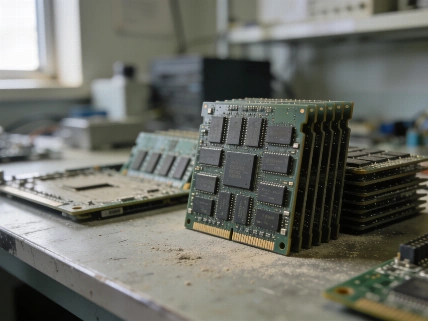
While the KOSPI is made up of more than 880 companies, its recent gains have been dominated by just two: Samsung Electronics and SK Hynix. Over the past year, Samsung shares have soared 248% and SK Hynix has jumped 613%, both propelled by global demand for high-bandwidth memory chips used in artificial intelligence data centers. Together, these two companies now account for over half the KOSPI's market-cap-weighted index, meaning their price swings have an outsized impact on the entire market. The Korea Exchange has triggered more than 35 sidecars and 7 circuit breakers in 2026 alone-surpassing the number of such volatility controls used during the entire 2008 financial crisis.
Leveraged ETFs and Retail Risk-Taking
Retail investors in South Korea have increasingly turned to leveraged ETFs, which amplify both gains and losses by using financial derivatives. According to JPMorgan Chase, Korean leveraged ETF assets reached about $50 billion at the end of June-four times the U.S. level relative to market size. This surge has contributed to sharp daily swings and forced deleveraging events, as investors are forced to unwind positions when markets move against them. The result has been a series of rapid, meme-like moves in the KOSPI, reminiscent of the speculative trading seen in U.S. meme stocks in recent years.
U.S. markets are not immune to these dynamics. Leveraged and inverse ETFs made up 31% of all new U.S.-listed ETF launches in the first half of 2026, up from 22% in 2025, according to Morningstar. Total assets in U.S. leveraged ETFs now stand at roughly $200 billion, representing about $500 billion in notional exposure at typical leverage ratios. Meanwhile, zero-day-to-expiration options-contracts that expire the same day they are traded-now account for nearly half of retail options volume, based on Citadel Securities data. This rapid-fire trading environment can amplify volatility and increase the risk of sudden market reversals.
Market Concentration and the AI Effect
The U.S. stock market is experiencing its own form of concentration risk. In the S&P 500, the 14 largest companies now make up almost 45% of the index's total weighting. The Nasdaq-100 is even more top-heavy, with its 10 largest companies accounting for over 67% of the index. Most of these giants-such as Apple, Microsoft, Nvidia, and Alphabet-are deeply invested in artificial intelligence, making the indexes highly sensitive to the fortunes of the AI sector. This mirrors the KOSPI's dependence on Samsung and SK Hynix, and raises questions about how diversified broad-based index investing really is in today's market.
Historically, new technologies have often sparked bubbles as investors overestimate the speed and scale of adoption. The dot-com era of the late 1990s saw a similar pattern, with internet stocks driving indexes to record highs before a sharp correction. While AI adoption is advancing rapidly, it remains to be seen how quickly companies can translate investment in AI infrastructure into sustained profits. The risk is that concentrated gains in a handful of stocks could reverse just as quickly if sentiment shifts or growth expectations are not met.
Lessons for U.S. Investors
The volatility in South Korea's stock market is a reminder that concentration and speculative trading can destabilize even large, established indexes. For U.S. investors, the parallels are hard to ignore. Both the S&P 500 and Nasdaq Composite are now more reliant than ever on a small group of AI-focused companies, while retail investors are increasingly using leveraged ETFs and short-term options to chase returns. These trends can magnify both gains and losses, and may leave portfolios exposed to sudden shocks if market conditions change.
Recent trading in the iShares Semiconductor ETF highlights how sector concentration can lead to sharp reversals. After a strong run in 2024, the fund dropped more than 20% from its peak, prompting some investors to consider broader tech ETFs as a way to reduce risk. For a deeper look at how ETF concentration can affect returns and volatility, see this analysis of semiconductor ETF performance and diversification.
Leveraged ETFs are designed to multiply the daily returns of an underlying index, often by two or three times. While this can boost gains in a rising market, it also increases the risk of large losses during downturns or periods of high volatility. These products typically reset their leverage daily, which can lead to compounding effects that erode returns over time, especially in choppy markets. Investors considering leveraged ETFs should understand how these funds work, the risks of rapid market swings, and the potential for forced deleveraging. As market concentration and speculative trading continue to shape both U.S. and global indexes, understanding these mechanisms is essential for managing risk and making informed investment decisions.