
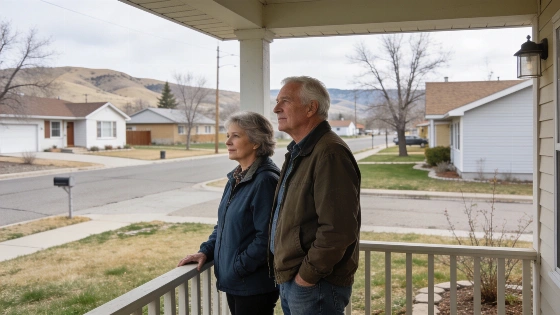
Retirees seeking affordable living, tax advantages, and access to outdoor recreation are increasingly considering smaller Western cities like Casper, Evanston, and Pomeroy, where home prices can be over $50,000 below the national average
For retirees looking to stretch their savings, several cities in the western United States are emerging as attractive destinations. According to Investopedia's 100 Best Places to Retire in 2026, locations such as Casper, Cheyenne, and Evanston in Wyoming, Juneau in Alaska, and a cluster of cities in Washington-including Omak, Pasco, Pomeroy, Spokane, and Vancouver-stand out for their blend of affordability, lifestyle, and tax benefits. These cities offer a mix of lower housing costs, access to healthcare, and opportunities for active living, but each comes with its own set of trade-offs.
Housing affordability is a major draw in many of these areas. In February 2026, the average home value in Evanston, Wyoming, was $304,759, while Pomeroy, Washington, posted an average of $251,522, and Casper, Wyoming, came in at $301,892. All three are well below the national average home value of $360,591 for the same period, based on Zillow data. However, cities like Vancouver, Washington, and Juneau, Alaska, have higher home prices, which can push up the overall cost of living. In these cases, other financial factors-such as the absence of state income tax in Washington and Alaska-help offset higher housing expenses.
Tax Policy and Retirement Income
State tax policy can have a significant impact on retirement finances. Washington and Alaska both offer the advantage of no state income tax, which can help retirees keep more of their Social Security, pension, and investment income. Washington also maintains a relatively modest property tax rate, though it does impose a capital gains tax that excludes retirement plan gains. These features make the state particularly appealing for those seeking to maximize their retirement dollars. In contrast, Wyoming's low property taxes and lack of state income tax also contribute to its appeal, especially for retirees with fixed incomes.
While tax benefits are important, they are only one part of the equation. Retirees must also consider the cost of healthcare, which can vary widely by location. All of the highlighted cities have local hospital systems, but smaller or more remote areas-such as Juneau or Pomeroy-may offer limited access to specialty care. This can mean higher out-of-pocket costs or the need to travel for certain medical services, which should be factored into any retirement budget.
Healthcare Access and Lifestyle Trade-Offs
Access to quality healthcare is a critical consideration for retirees, especially as medical needs tend to increase with age. While larger cities like Spokane and Vancouver offer more comprehensive hospital networks and specialty providers, smaller towns may require residents to travel for advanced care. This can add both financial and logistical challenges, particularly for those with chronic conditions or mobility issues.
On the lifestyle front, many of these Western cities provide abundant opportunities for outdoor recreation, from hiking and fishing to skiing and boating. This active environment can support healthy aging and social engagement, but some locations may have fewer cultural amenities, entertainment options, or public transportation services. Retirees prioritizing access to arts, dining, or urban conveniences may find these trade-offs significant.
Comparing Retirement Destinations
Choosing where to retire involves balancing cost, healthcare, taxes, and lifestyle preferences. For example, while Pomeroy and Evanston offer lower home prices, they may lack the healthcare infrastructure or cultural amenities found in larger cities. Vancouver and Juneau, despite higher housing costs, provide tax advantages that can help offset expenses for some retirees. According to reporting by Investopedia, these trade-offs are central to the decision-making process for those planning their retirement years.
Recent data from the U.S. Census Bureau shows that the population of Americans aged 65 and older continues to grow, with nearly 56 million in 2025-a trend that is reshaping housing demand and retirement planning across the country. As more retirees seek affordable options, smaller Western cities are seeing increased interest, but the right choice depends on individual priorities and financial circumstances. For those weighing the pros and cons of retiring in a smaller city, the experience of communities like Mason City, Iowa-where affordable living is paired with a vibrant local culture-offers a useful comparison, as discussed in this analysis of affordable retirement trade-offs.
When evaluating retirement destinations, it's important to look beyond headline home prices or tax rates. Factors such as healthcare access, transportation, climate, and community resources can have a major impact on both quality of life and long-term financial security. Retirees should consider not only their current needs but also how those needs may change over time, and whether a chosen location can continue to meet them as circumstances evolve.