With the S&P 500 at record highs and Nvidia now valued above most national economies, Oppenheimer is signaling a potential seasonal pullback that could test investors' resolve before year-end
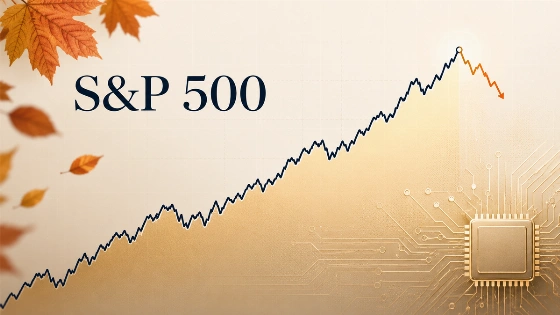
As U.S. stocks continue to set new records, some market strategists are starting to question how long the party can last. The S&P 500 has climbed 13% so far in 2026, with technology stocks up 19% and energy shares gaining 22%, according to CNBC. But with valuations stretched and a handful of mega-cap names driving much of the gains, Oppenheimer is cautioning clients that a seasonal correction could be on the horizon.
Oppenheimer's technical analysis team, led by Ari Wald, is watching for a typical midyear pattern that often emerges during the second term of a U.S. president. Historically, stocks have rallied into spring, stalled in the summer, and then dipped in the third quarter before rebounding ahead of the next election year. Wald's analysis suggests the S&P 500 could retreat toward the 7,000 level before the end of 2026-a move that would be painful but not necessarily signal the end of the bull market.
Concentration Risk
One of the most striking features of the current rally is the sheer size of Nvidia's market capitalization. As of July 12, Nvidia was valued at roughly $5.1 trillion, according to CompaniesMarketCap. That makes the chipmaker larger than the annual economic output of every country except the United States and China, based on International Monetary Fund projections. For context, Germany's entire GDP is estimated at $5.45 trillion for 2026, only slightly above Nvidia's market value.
This concentration means that investors in S&P 500 index funds, 401(k) plans, and target-date funds are now more exposed than ever to the performance of a single stock. As Nvidia's share price has soared, its weight in major indexes has grown, increasing the potential impact of any pullback. The company employs about 36,000 people, while Japan's economy-smaller than Nvidia's market cap-is supported by a population of 124 million, according to Visual Capitalist.
Seasonal Patterns and Market Breadth
Oppenheimer's warning is not a call to exit the market entirely. The firm points to healthy market breadth, with the equal-weighted S&P 500 also hitting new highs, suggesting that gains are not limited to just a few large companies. Still, the risk of a typical seasonal setback remains. Wald's view is that this year's setup may favor trimming positions in July and looking to reinvest in October, rather than following the old "sell in May and go away" adage.
For investors, the key takeaway is that a correction-while uncomfortable-does not necessarily spell the end of the rally. Oppenheimer sees any pullback as a potential buying opportunity, with the expectation that the market could recover heading into the fourth quarter. The firm also notes that the weakest S&P 500 sector so far in 2026 has been consumer discretionary, down nearly 1%, while semiconductors remain the most crowded trade.
What's at Stake for Investors
The scale of Nvidia's dominance raises questions about diversification and risk management. If the stock were to stumble, the ripple effects could be felt across retirement accounts, pension funds, and college savings plans that track the S&P 500. This kind of top-heavy market does not require a recession to experience volatility-a shift in sentiment or a crowded trade unwinding could be enough to trigger a meaningful pullback.
Market data from July 2026 shows the S&P 500 closing at record highs, with Nvidia's $5.1 trillion market cap now representing a significant portion of the index. The U.S. economy is projected at $32.38 trillion for 2026, while China's is estimated at $20.58 trillion, according to the IMF. These figures highlight just how much influence a single company can have on broad market performance.
Investors should be aware that while the current environment has rewarded those who stayed invested, the risk profile has shifted. As Oppenheimer's analysis suggests, knowing when to trim exposure and when to re-enter the market may be more important than trying to time the exact top or bottom. For those interested in how concentrated bets can impact stock performance, the recent plunge in Ionis Pharmaceuticals shares after drug setbacks offers a cautionary example, as detailed in this related report.
Oppenheimer's message is not to panic or abandon equities, but to recognize the potential for a normal, if sharp, correction. With the S&P 500's gains increasingly tied to a handful of tech giants, investors may want to keep an eye on portfolio balance and be prepared for volatility as the year progresses.
Understanding how index funds work is crucial in this environment. These funds are designed to mirror the performance of a specific market index, such as the S&P 500, by holding all or a representative sample of the stocks in that index. As a result, when a single company like Nvidia grows to dominate the index, investors' exposure to that stock increases automatically, regardless of their individual preferences. This can lead to greater gains during rallies but also amplifies losses if the dominant stock declines. Investors should periodically review their portfolios to ensure their risk tolerance and investment goals remain aligned with their actual holdings, especially in markets where a few companies wield outsized influence.