
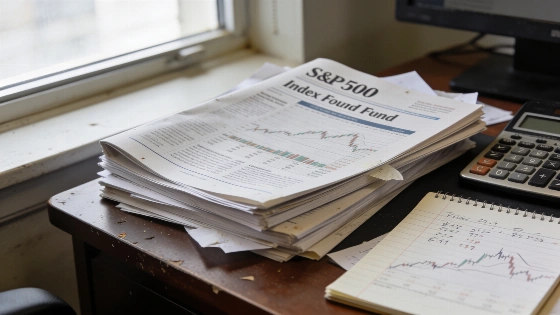
The S&P 500's average annual drop is about 14%, but investors who sell during downturns often miss out on recoveries. A disciplined approach-staying invested and buying regularly-can improve long-term results, even through volatility
Stock market pullbacks are a routine part of investing, but they often trigger anxiety and second-guessing among investors. The S&P 500, a widely followed benchmark for U.S. stocks, typically sees an intrayear decline of around 14%. While these drops can feel unsettling, history shows that selling during downturns can do more harm than good for long-term returns.
Many investors are tempted to move to cash or reduce their exposure when volatility spikes. Yet, the evidence suggests that sticking to a disciplined buy-and-hold strategy-and continuing to invest systematically-can help portfolios recover and even outperform over time. This approach is especially relevant in years like 2026, when volatility has been relatively muted outside of brief geopolitical shocks, such as the early-year Iran war, which saw the Vanguard S&P 500 ETF (VOO) fall about 9% before rebounding.
Understanding Typical Market Declines
Market corrections-defined as declines of 10% to 15%-are not rare events. According to historical data, the S&P 500 has experienced an average intrayear drop of 14% since 1980, but still managed to finish the year with a positive return roughly 75% of the time. Bear markets, which involve declines of 20% or more, are less frequent but can last longer, averaging about 11 months with full recoveries often taking two and a half years.
Despite these setbacks, the odds of achieving a positive return improve the longer an investor stays in the market. For example, holding the Vanguard S&P 500 ETF for one year has historically resulted in a positive return 74% of the time. That probability rises to 94% over a 10-year holding period, based on data from Capital Group. This pattern underscores the importance of time horizon in equity investing.
Behavioral Risks During Volatility
Emotional reactions to market swings can undermine long-term performance. Investors who sell after a decline often miss the strongest recovery days, which tend to occur during periods of high volatility. Waiting for conditions to "feel safe" before re-entering the market can mean missing out on significant gains. According to reporting by Financial Sumo, many investors who exit during downturns struggle to get back in before prices have already rebounded.
For those with shorter time horizons-such as needing funds within a couple of years-the risk of encountering a bear market may outweigh the potential reward. But for long-term investors, maintaining regular contributions through downturns, a strategy known as dollar-cost averaging, can lower the average cost per share and improve long-term results.
Practical Strategies for Long-Term Investors
Investors aiming for long-term growth in the S&P 500 can benefit from three core practices: avoid waiting for perfect conditions, keep the investment time frame in mind, and continue systematic purchases regardless of market swings. Dollar-cost averaging-investing a fixed amount at regular intervals-helps smooth out the impact of volatility and reduces the temptation to time the market.
For those seeking to prepare for more severe downturns or market crashes, building a cash reserve can provide flexibility and reduce the pressure to sell during declines. For a deeper look at how investors are responding to high valuations and uncertainty in 2026, see this analysis of defensive strategies and cash management in how some investors are preparing for a possible stock market crash.
While no strategy can eliminate risk, the evidence suggests that time in the market is a more reliable predictor of success than attempts to avoid every downturn. Investors should weigh their own risk tolerance, liquidity needs, and financial goals before making changes to their portfolio.
Market volatility is an inherent feature of equity investing. The S&P 500's long-term returns are driven by both price appreciation and reinvested dividends, but the path is rarely smooth. Understanding the difference between routine corrections and true bear markets can help investors set realistic expectations and avoid costly mistakes. Systematic investing, combined with a clear view of one's time horizon and risk tolerance, remains a cornerstone of sound portfolio management.